Rabu, 06 Juni 2018

Posted by ladislaoprimocamrynbove on Juni 06, 2018 in | No comments

Download Ebook , by Patrick J. Deneen

This , By Patrick J. Deneen ends up being an enhance in your preparation for much better life. It is to should get guide to acquire the best vendor or finest author. Every book has particular to earn you feel deeply about the message and perception. So, when you find this publication in this website, it's better to obtain this publication soon. You can see just how a basic book will certainly provide powerful perception for you.

, by Patrick J. Deneen

, by Patrick J. Deneen


, by Patrick J. Deneen


Download Ebook , by Patrick J. Deneen

Feel dizzy of your target date job? It seems that you need addition resources and ideas, don't you? Do you like reading? What kind of reading products you may most likely enjoy to do? We will reveal you , By Patrick J. Deneen as one of the recommended publications that will be in this location. As recognize, this internet is incredibly popular with all great books in soft data version. When you have ideas making deal with this book, it must be promptly done.

This is just one of the ways when you have no demon during that time; make guide as your true pal. Also this is not sort of talk-active point, you could make brand-new mind and obtain brand-new inspirations from the book. From the literary book, you can gain the home entertainment as when you watch the motion picture. Well, talking about the books, really just what kind of book that we will suggest? Have you become aware of , By Patrick J. Deneen

Maturing from primary to the grown-up, checking out books will certainly let various needs to think. Sometime, we require guide because of the work deadline. However in other time, you can review once again this , By Patrick J. Deneen, for not only the task deadline need however likewise for excited. So, is reading this publication your wonderful excited to read. When you have enough to seek for another book that can not make you really feel pleased, you will always try to find various other sources, won't you? This is why we involve you in order to help in finding the ideal book.

Once again, what kind of individual are you? If you are actually among the people with open minded, you will certainly have this publication as your referral. Not only possessing this soft documents of , By Patrick J. Deneen, but naturally, review and recognizes it comes to be the must. It is just what makes you go forward better. Yeah, move forward is needed in this situation, if you want truly a better life, you can So, if you truly want to be far better person, read this book as well as be open minded.

, by Patrick J. Deneen

Product details

File Size: 1040 KB

Print Length: 249 pages

Page Numbers Source ISBN: 0300223447

Publisher: Yale University Press; Reprint edition (February 26, 2019)

Publication Date: February 1, 2019

Sold by: Amazon Digital Services LLC

Language: English

ASIN: B078871BC2

Text-to-Speech:

Enabled

P.when("jQuery", "a-popover", "ready").execute(function ($, popover) {

var $ttsPopover = $('#ttsPop');

popover.create($ttsPopover, {

"closeButton": "false",

"position": "triggerBottom",

"width": "256",

"popoverLabel": "Text-to-Speech Popover",

"closeButtonLabel": "Text-to-Speech Close Popover",

"content": '

' + "Text-to-Speech is available for the Kindle Fire HDX, Kindle Fire HD, Kindle Fire, Kindle Touch, Kindle Keyboard, Kindle (2nd generation), Kindle DX, Amazon Echo, Amazon Tap, and Echo Dot." + '
'

});

});

X-Ray:

Enabled

P.when("jQuery", "a-popover", "ready").execute(function ($, popover) {

var $xrayPopover = $('#xrayPop_72553E82438511E995541D02E46062F3');

popover.create($xrayPopover, {

"closeButton": "false",

"position": "triggerBottom",

"width": "256",

"popoverLabel": "X-Ray Popover ",

"closeButtonLabel": "X-Ray Close Popover",

"content": '

' + "X-Ray is available on touch screen Kindle E-readers, Kindle Fire 2nd Generation and later, Kindle for iOS, and the latest version of Kindle for Android." + '
',

});

});

Word Wise: Enabled

Lending: Not Enabled

Screen Reader:

Supported

P.when("jQuery", "a-popover", "ready").execute(function ($, popover) {

var $screenReaderPopover = $('#screenReaderPopover');

popover.create($screenReaderPopover, {

"position": "triggerBottom",

"width": "500",

"content": '

' + "The text of this e-book can be read by popular screen readers. Descriptive text for images (known as “ALT text”) can be read using the Kindle for PC app and on Fire OS devices if the publisher has included it. If this e-book contains other types of non-text content (for example, some charts and math equations), that content will not currently be read by screen readers. Learn more" + '
',

"popoverLabel": "The text of this e-book can be read by popular screen readers. Descriptive text for images (known as “ALT text”) can be read using the Kindle for PC app if the publisher has included it. If this e-book contains other types of non-text content (for example, some charts and math equations), that content will not currently be read by screen readers.",

"closeButtonLabel": "Screen Reader Close Popover"

});

});

Enhanced Typesetting:

Enabled

P.when("jQuery", "a-popover", "ready").execute(function ($, popover) {

var $typesettingPopover = $('#typesettingPopover');

popover.create($typesettingPopover, {

"position": "triggerBottom",

"width": "256",

"content": '

' + "Enhanced typesetting improvements offer faster reading with less eye strain and beautiful page layouts, even at larger font sizes. Learn More" + '
',

"popoverLabel": "Enhanced Typesetting Popover",

"closeButtonLabel": "Enhanced Typesetting Close Popover"

});

});

Amazon Best Sellers Rank:

#34,083 Paid in Kindle Store (See Top 100 Paid in Kindle Store)

I recently returned home from a business trip. West Africa, Istanbul, Bangkok, Paris and back to West Africa. It’s appropriate that my journey started in West Africa, from whence Robert Kaplan twenty-five years ago warned us of the ‘coming anarchy’, an anarchy which has now arrived. It is also appropriate that my reading for this trip was Patrick Deenan’s new book “Why Liberalism Failed”. Hagia Sophia, Notre Dame and the ancient Buddhist temples – the Bosphorus and the Seine and the Chao Phraya. Cradles of onetime powerful civilizations themselves which also fell away, overlaid now by liberalism’s vapid mono-anticulture.Civilizations – ours has been called “liberalism”, a five-hundred-year-old idea that is now over.Liberalism in its original intent was about freedom, freedom from outward constraint to be sure but also freedom from our own ungovernable human urges. Self-control, restraint, discipline. Deenan’s main contention is that our liberal project, at least how we have recently come to define it, has been taking us down a very dark, self-destructive path. We have focused the efforts of our civilizational struggles on the need to free us from each other, from any bonds that might be interpreted by anybody as restrictive – oppressive. An entirely external locus of attention – ignoring the important role of “liberty” in self-governance as we cast our nets ever-further afield, searching vigilantly for oppression in all its forms and fables.Yes, oppression, that is the word of the day.Libralism has become laser focused on ending oppression. But how was this to be achieved? Classical liberalism envisioned a world run by markets where our only limitations were of our own making. Progressive liberals saw a powerful benevolent state ready to cripple the enslavers and deliver everybody to themselves. Family, propriety, dignity, anatomy, environment, faith – all these were simply tools of oppression to be overcome by the means of market or state; at least that is Deenan’s contention.This book could be called “In Defense of Culture”. That might even be better – a full throated clamoring for us all to remember that we are not place-less, sex-less, past-less, future-less entities. We did not arrive to planet earth, grown in a plastic bag by scientists for use of the elites, as is so often portrayed in the new post-apocalyptic sci-fi movies; our brains empty though our bodies are fully formed.No, we arrived from our culture. Not “pop-culture” but instead that idea of culture that comes from the word cultivate – to carefully prepare the earth for the seed, to fertilize it, protect the plant as we watch it grow and mature; prune it and keep the predators away and nurture it, for we need it to produce a bountiful harvest of golden fruit not only once, eschewing a tomorrow as we satiate our immediate pangs of hunger but also again and again and yet again. For ourselves and our children and our children’s children.Consumption – I think what I most appreciated about Deenan’s book was the discussion of consumption. As a free marketer I have been trained in the knee jerk reaction against those who decry consumption. How else do we get anything, if not purchasing it from the market to consume? Waking up, grabbing the toothpaste, the toothbrush, mouthwash, clothing and a shower and a coffee with cream and sugar. I haven’t even left the house yet and already I’ve depended on the market a dozen times. Besides, isn’t the opposite of the market system the centrally planned one? Isn’t the opposite of capitalism, communism? And anybody who reads me knows how I feel about that ideology.Yes – we consume, but our division of labor, our anonymity allow us to think rarely about our depleted watersheds, our empty aquifers, our burned down forests and the accelerated destruction of our carbon-fueled world. We assume technology will fix it – of course, hasn’t it always in the past? Aren’t we at our most ingenious when we’re pushed against the wall, facing extinction?We deny culture because we want an end to oppression – and culture exists to tell us of our land, our lives – our limits as they relate to God and nature. Yet we have a dark empty hole in our hearts that we prefer not to think about, and we instinctively fill that hole with the state – a positivist superstate that decides morality and opportunity and supervises our every interaction, assuring that each and every one is free from constraint, external or internal. Why do you think we fight so hard over who controls that state? Because our Platonic state now defines us. Or we want to finally, at long last, free the market, telling ourselves what we really need is to let the invisible hand guide us to perfect liberty – no not God’s hand but the invisible hand of our own self-interest. How could that go wrong? And in the never-ending hunt for oppressors we overlook the greatest oppressor of all – ourselves.As I journeyed across the world reading Deenan in the courtyard of Topkapi Palace, sitting gazing at the Eiffel Tower or eating noodles at a local food stand beside a great river in Asia, I was amazed by the pervasiveness of the homogeneity that Deenan rightly identifies as the sign of our abiding anti-culture. Smart phones that ring no matter where I am; brands I recognize announced in technicolor from a garish sign over an ancient mosque; cars and planes and laptops that have all made our world safe, safe but fundamentally unstable.Will humanity realize that our culture-less consumption is ephemeral? That we can’t keep it up and that this time maybe, just maybe, no technological “fix” will be forthcoming? At least not in time. At least not for the animals, for the water, for the forests and the trees and for ourselves.Will we look up in time from our smartphones to realize that yes, we have freed ourselves from each other and from any limits of anything that we might self-identify as “oppressive”, but this has only made us miserable as it destroyed our world?I doubt it – for I am not optimistic. Those who read my musings about “the arriving ordeal” know at least that. But what to do? Darned if I know – except the one answer I always return to. Read. Read backwards; start with Deenan and go back and back and back again until you arrive at Tolkien and then keep going till you get to Tocqueville and keep going still. Burke and Bacon and Locke and Augustine; Cicero and finally Aristotle. Look around at the valleys and the mountains that define your values, that set the limits to your expansion – yes there are limits – and make your peace with them, finding again your faith and your family and eventually your happiness. I will do the same. Maybe someday we will meet, and you will tell me about how you found your joy and I will smile while I tell you about mine. And they will be different, because by then our civilization of mono-anticulture will have come crashing down. And we will tell the story of how we survived.

Poor Francis Fukuyama. He has been a punching bag ever since he unwisely declared the End of History, more than twenty-five years ago. Fukuyama, of course, meant that the globe had, at the end of ideologies, reached an equilibrium, an even, calm sea of liberal democracy, and all that was left was cleanup. Patrick Deneen is here to kick Fukuyama some more, and to announce that not only is liberalism a defective ideology, it is doomed just as were the other, more flash-in-the pan ideologies. The systemic failure of liberalism is on the horizon, or underway, and Deneen’s project is to offer thoughts on how we got here, and what is next. Thus, "Why Liberalism Failed" fits squarely into my current interest, Reaction—the call for the creation of a new political order built on the ashes of the old.By “liberalism,” Deneen means the philosophy of the Enlightenment, built on the core idea of maximizing human liberty, with its ultimate philosophical roots in Francis Bacon, adapted by Thomas Hobbes and John Locke, and mediated through John Stuart Mill. Deneen begins with his central claim—that liberalism is reaching its end, because it was a beautiful-seeming thing, built on lies. Liberalism is like the Queen in Snow White, a mortal who over time has become ugly, but who retains the outward form of beauty through a blend of careful management and acts of evil. But as with other ideologies, such as communism, it must fail, because it denies human nature, and it loses legitimacy as the resulting gaps between its claims and the reality of lived human experience become ever more visible. In the end, the Queen, and all ideologies, are exposed for what they are, and die.The failure of this liberalism is not the failure of today’s political liberals, or what might generally be called progressives. Deneen ascribes blame for the rise and fall of liberalism equally to both progressives and to most American conservatives, what are sometimes called classical liberals. Both liberals and such conservatives pursue autonomic individualism while ignoring the deeper reality that such overemphasis on individualism is anti-human and doomed to failure. The failures of liberalism are failures of the state and the market, which are intertwined, not opposed, and the resulting plant is watered equally by conservatives and liberals. There is no Jack cutting at the base of this beanstalk; when it falls, it will be because it has rotted from within.Deneen, therefore, calls it “Unsustainable Liberalism.” He begins with a history lesson, pointing out that the human desire for liberty far pre-dates liberalism, but that liberty from the ancient Greeks onward, up until the Enlightenment, meant ordered liberty. That is, it was the opposite of wholesale autonomy. Instead, it was the tutored choice of each person to choose virtue and self-rule, creating freedom from the tyranny of appetites in the individual and from tyranny of individuals in the polis. (This history is covered at more length, and better, in "Conserving America?", a book of essays that Deneen published in 2016.) But liberalism, heralded by Machiavelli, rejected the cultivation of virtue as the basis of good government and a good society, in favor of a “realist” understanding of people as unalterably bad, and required to be managed as such by the creation of institutions that constrained them. This was followed by Hobbes’s and Locke’s removal of “the essential supports for a training in virtue,” which “came to be viewed as sources of oppression, arbitrariness, and limitation.” And, finally, to permit maximum human flourishing, liberalism, following Francis Bacon, demanded that nature itself must be overcome, first to reliably maximize her material bounty, and later to deny even her existence so as not to limit individual choice, in both cases to maximize human power and autonomy. All this, of course, was in opposition to “the classical and Christian understanding of liberty.”Liberalism itself tells us constantly it is a success. And it certainly is “an encompassing political ecosystem in which we have swum, unaware of its existence.” Questioning liberalism seems like questioning air. Any problems with our society, and any rejection of the premises or conclusions of liberalism, are seen as merely resulting from not enough liberalism. The response is to call for liberalism to better enforce its dictates everywhere, using a more forceful application of liberalism—Ryszard Legutko’s “coercion to freedom.”But Deneen says liberalism’s putative success at making us happier and freer is an illusion. Rather, liberalism is caught in a downward spiral, in which the ill societal effects of unbridled autonomy require more government force, proscriptions, and surveillance, while simultaneously the same is required to achieve ever more emancipation and individual liberty. The state becomes the object of love, or at least the binding force, for an atomized and isolated population. The economics of liberal democracy create a new aristocracy of winners and an underclass of losers, with the latter only pacified by the promise of increased future consumption due to promised overall economic growth. Education that forms the human being to be a full member of society has disappeared in favor of servile education in money-making, with more money always seen as better. And that same education has indoctrinated society in a key requirement of liberalism’s perceived success—the unsustainable extraction from nature of goods intended to maximize the utility of today’s generation (and maintain the quietude of economic losers), with no thought for moderation or for future generations. Worse, nature is conquered with technology that, put in the hands of individuals rather than resource extractors, promises yet more liberation but only delivers a combination of jitters and loneliness. “Liberalism’s end game is unstainable in every respect: it cannot perpetually enforce order upon a collection of autonomous individuals increasingly shorn of constitutive social norms, nor can it provide endless material growth in a world of limits. We can either elect a future of self-limitation born of the practice and experience of self-governance in local communities, or we can back inexorably into a future in which extreme license coexists with extreme oppression.”Deneen next turns to aspects of liberalism other than its unsustainability. First is culture, or, more precisely, “Liberalism as Anticulture.” Not all things called culture are in fact culture, which is properly viewed as “a set of generational customs, practices, and rituals that are grounded in local and particular settings.” “Pop culture” is not culture at all. Similarly, what liberalism offers as culture is instead something not grounded in nature; not grounded in time; and not grounded in place. “Whereas culture is an accumulation of local and historical experience and memory, liberal ‘culture’ is the vacuum that remains when local experience has been eviscerated, memory is lost, and every place becomes every other place.”This anticulture is the result of two trends in liberalism—the homogenization created by market liberalism, and the destruction of local customs and practices by the overweening liberal state in the service and pursuit of emancipation, which holds that “legitimate limits upon liberty can arise only from the authority of the consent-based state.” “Liberalism makes humanity into mayflies,” rejecting the bonds of time connecting us to the past, in the form of the arts and history, and to the future, in the form of mortgaging our descendants’ patrimony by stripping the Earth. Deneen relies heavily on Tocqueville in this analysis, as do many civil institutionalist conservatives (that is, those who focus on cultural renewal through a revival of civil society outside the state), since he predicted much of the outline of modern American society. He also cites Solzhenitsyn, whose famous 1978 commencement address at Harvard University (for which he was excoriated at the time) noted this hollowing out of “every social norm and custom” as being at the heart of liberalism.As far as emancipation, I think (though Deneen does not address this) the only emancipation worth having in America is that of African Americans, whether in the nineteenth, twentieth, or, indeed, the twenty-first centuries. The experience of black people in America is unique, and uniquely bad, and it is an actual, lived, historical experience, not some Gramscian fantasy of hegemony funneled through Foucault. All other so-called emancipations are the tools of those who would destroy us; they are grants to act in certain ways or to receive unearned benefits, given by the Leviathan state to those who either do not require or should not have such grants or benefits, at the expense of the rest of the community. Emancipation should be a dirty word and its users should be punished with a day in the stocks in the town square.Anyway, the next two chapters attack modern technology for enabling the destructive behavior of liberalism; and for destroying the classical liberal arts, both by exalting studies that lead to success in the market over the classical “liberal arts,” the humanities, and by the destruction of what remains of the classical liberal arts by liberalism’s refashioning of them into vehicles for deconstruction and emancipation. It is this latter point, I think, that is most critical (the atomizing tendencies of technology are widely known and acknowledged, after all, even by liberals). Howsoever we got here, and whatever value they used to offer, there is no restoration of the classical liberal arts in the universities of today. We should nuke them all from orbit, refusing any taxpayer dollars to the support of anything but the servile arts. We should leave the universities to educate only in technical matters, and throw all teachers of humanities out on the street, where they can peddle their Gender Studies and Latino Studies potions to the (unemployed) gullible in dark alleys. The few professors who do offer real learning will find new employment in colleges that offer real value (of which there are still a few, like Hillsdale College). Or we can rely on our own resources to hire them directly to educate our own young. In both cases we will deny the use of common resources to poison the minds of the young. Better no humanities than what is taught today. I don’t like this conclusion (and it’s mine, not Deneen’s), since I am the child and grandchild of humanities professors, and have friends who are thus employed, but that’s the way it has to be. Dying things should be killed quickly, in this case, that they may have the chance to be reborn.Deneen then turns to “The New Aristocracy,” in which he reinforces the point that liberalism (as shown by, among other things, the Enlightenment focus on unleashing the abilities of those most favored by talents at birth) necessarily creates a divide between the successful and the rest. This divide expands over time, as we can see in contemporary America, and is pernicious. Liberalism’s response is, as Ronald Reagan used to say, “a rising tide lifts all boats.” But not all boats are lifted any more, and even if they were, the fracture of society into a class of the powerful who get more powerful and more wealthy, and a class of Morlocks who, over time, are somewhat more able to consume trinkets is not a winning strategy. We need more Burke, and less Mill.Penultimately, Deneen turns to “The Degradation of Citizenship.” Here he specifically attacks “liberal democracy,” although Ryszard Legutko does it better. Deneen notes that those who push liberal democracy mean that democracy is good only so long as voters choose what is approved by liberalism; otherwise, it is “illiberal democracy” (a term gaining more and more currency, I have noticed). Deneen cites Jason Brennan’s "Against Democracy," which attacks democracy on this basis, demanding that more people just like Jason Brennan be given power to dictate the direction of society (thus making, oddly, Jason Brennan my ally in pursuing Reaction). Liberalism wants democracy to be limited to expressing preferences of the masses, which, if approved by their betters, can then be implemented by the mandarin administrative state. All this means that the individual human is not expected to be a citizen in any meaningful sense, so he is not—Deneen, unlike Brennan, thinks that liberalism caused this problem, and that in Tocqueville’s time the average person had more of the indicia of classical citizenship. I am not so sure this is the case, but it is Deneen’s claim.Finally, Deneen, of course, offers, if not solutions, at least a way forward. First, though, he sees two main problems with the end of liberalism (assuming it collapses, rather than metastasizes into totalitarianism). One is that in the mind of most people, propagandized by liberalism itself, liberalism is responsible for the success of the “deepest longings of the West, political liberty and human dignity.” The rejoinder to those who reject liberalism is that anyone who rejects liberalism embraces slavery and the divine right of kings. This is of course not true, among other reasons because all the core “good things” of liberalism were not originated by liberalism, but by earlier Western Christian thought (though the pre-liberal West often failed to meet its own aspirations), and because liberalism itself increasingly replaces chattel slavery with ideological slavery and the divine right of kings with the equally, or more, tyrannical rule of the administrative state. Nonetheless, Deneen hedges here, intimating that he believes that liberalism has “achievements” and it also has “rightful demands—particularly for justice and dignity.” But he does not admit of any real achievements of liberalism, and by his own analysis, demands for real justice and dignity (as opposed to bogus, never-ending “emancipation”) are universal and far antedate liberalism, so if liberalism demands them, it is merely mimesis, not some fresh or independent way in which liberalism benefits humanity.The other problem is more distant but more difficult (especially if Deneen is right that liberalism is doomed, whatever rejoinders it may have to criticisms of it). It is that to break the world is necessarily to create chaos, “disorder and misery,” and would probably result in liberalism’s “replacement with a new and doubtless not very different ideology. . . . A better course will consist in smaller, local forms of resistance: practices more than theories, the building of resilient new cultures against the anticulture of liberalism.” Citing (unsurprisingly) Rod Dreher’s "The Benedict Option," Deneen says “we should focus on developing practices that foster new forms of culture, household economics, and polis life.” As I have said elsewhere, to the extent such an option takes hold, it will have to fight for its life, and not with words only. Deneen nods toward this, suggesting that such “options” will be “permitted to exist so long as they are nonthreatening to the liberal order’s main business.” But he does not follow this line of thought, perhaps figuring the problem will solve itself if, indeed, liberalism is inherently unsustainable, and ultimately will lack the power to suppress new movements. I am less sanguine, but he could be right.Overall, this book is not as good as the author’s earlier Conserving America? I think that Deneen is at his best writing essays, and Why Liberalism Failed is too much a set of essays masquerading as a book, without an adequate linkage that gives overall force. Moreover, within the essays, too many ideas are repeated with slight variation of thought and phrasing from chapter to chapter, making the chapters not adequately distinct from each other. Thus, the first chapter, “Unsustainable Liberalism” (published as a standalone essay in 2012 in the magazine "First Things"), is followed by a chapter on “Uniting Individualism and Statism,” repeating and expanding points made in the first chapter about the unity of purpose among progressive and classical liberals. Similarly, later chapters on technology and the humanities contain a much more expansive treatment of classical views of liberty than that found earlier in the book, where it would have made more sense. And variations on the point that Hobbes and Locke were wrong to think that the state of nature was one of autonomy are made too many times in too many places. Thus, I found some of the book rambling—the writing itself is clear, but there is a feeling of lack of coalescence about much of the book, perhaps because of the repetition and failure to have a clear progression.This book does add a theme Deneen has not addressed before, and that is liberalism as exhaustive of nature, and therefore unsustainable. But that is the weakest thread of the book, for predictions of material exhaustion of nature have always been falsified, from Malthus onward, as in the famous 1980 bet between Julian Simon and Paul Ehrlich. In fact, the side effects of resource extraction (other than, perhaps, global warming) are far less than they were in past decades (in part due to the heavy hand of government), and in a possible future world of such magical-yet-feasible technology as practical fusion, asteroid mining, or molecular-scale replicators, the exhaustion of nature would disappear as a problem. Moreover, there is a key question Deneen ignores, which is whether the fantastic economic, and therefore scientific, progress of the past 200 years is the fruit of liberalism, whatever its costs may be. Certainly, gluttony in the form of resource consumption is a moral bad that causes corruption of virtue, but the reader gets the impression that Deneen emphasizes the exhaustion of nature in part to be able to bind classical liberals to progressive liberals in the downward spiral of liberalism, and thus clearly distinguish himself from classical liberals, so the topic feels a bit shoehorned in.As to Reaction in theory and practice, I am framing my own analysis of that tendency, to which I increasingly adhere myself. As I noted in my review of Mark Lilla’s "The Shipwrecked Mind," it is possible to divide modern Reaction into a variety of incompatible categories, bound not by the desire to return to some mythical Golden Age, which could be dismissed as mindless nostalgia, but bound by the desire to inform a new age with the lost or ignored wisdom of the past. Most American devotees of reaction, of the intellectual bent, tend toward the reactionary thought of Leo Strauss, in essence holding that the Enlightenment project is the fount of wisdom, but it all went wrong since the Constitution was written. Deneen is one of the major exponents of the opposite tack—that the Enlightenment, i.e., liberalism, is itself the problem. It may have good propagandists (it must, having been given such a propagandistic name, more successful than the failed attempt by the New Atheists to rename anti-theists “brights”), but the Enlightenment is the original sin, and Francis Bacon is the Eve of the modern age.In political theory, therefore, Deneen is anti-Straussian; he sees the Founders, and the Constitution itself, as exemplars of liberalism, and therefore poisoned. That the Constitution (in its structure and as shown by "The Federalist Papers") is designed to pit people against each other, rather than seeking virtue, and to enable the exaltation of the competent over the mass of mankind, shows it to be defective. Along the same lines, conservative efforts to promote the Great Books in university education were self-destructive, since most of those Great Books are the problem, not the solution. The Golden Age that informs Deneen is that of Athens as mediated by Aquinas, not Athens as mediated by Machiavelli and Alexander Hamilton. Thus, Deneen’s civil institutionalism, based on pre-Enlightenment thought, is the fourth thread of modern Reaction, along with Straussianism, the Augustan approach of those such as Michael Anton, and the warped vision of Curtis Yarvin and the so-called Dark Enlightenment. Of these threads, civil institutionalists are no doubt the weakest in numbers, but my first cut, or my last cut of 2017, is that a melding of this approach and the Augustan approach may provide the sinews and motor of a new thing, a golem that can destroy and replace liberalism, without, if we are lucky, also turning on its creators.

Deneen succeeds in analyzing the corrosive effects of modern liberalism by showing how liberty was re-defined and works symbiotically with mo9dern materialistic consumer culture to dissolve the bonds of community, culture, and family and replace them with a world of atomized individuals and ever-growing government. Readers looking for more ammunition for current political debates will be disappointed, because Deneen goes much much deeper and reveals that much of what passes for conservative thought these days actually is rooted in modern liberalism. While he does not deny that liberalism has done some good, all-in-all Deneen suggests that it is not sustainable and is even now in its death throes.

Not an easy read for Americans or Europeans, especially since it is a bit like someone critiquing the air we breathe. And that's the reason it must be read. To help us look critically at the politics, institutions and liberal culture we take for granted. One of the reasons we are so incapable of understanding Trump and the rise of populism in our current age is because we are unable to see liberalism as an ideology. This also means we are unable to judge its predictable consequences. Deneen's book is an important step toward self reflection in this respect. Many have done it before him (including Deneen himself in his many essays) but this is the first time this crucial critique has been so clearly and concisely articulated. I, for one, am grateful.

, by Patrick J. Deneen PDF
, by Patrick J. Deneen EPub
, by Patrick J. Deneen Doc
, by Patrick J. Deneen iBooks
, by Patrick J. Deneen rtf
, by Patrick J. Deneen Mobipocket
, by Patrick J. Deneen Kindle
, by Patrick J. Deneen PDF

, by Patrick J. Deneen PDF

, by Patrick J. Deneen PDF

Senin, 28 Mei 2018

Posted by ladislaoprimocamrynbove on Mei 28, 2018 in | No comments

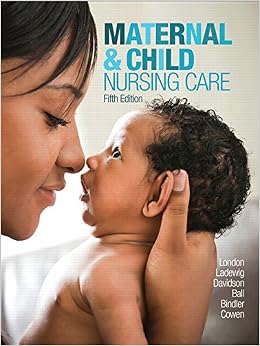
PDF Download Maternal & Child Nursing Care (5th Edition)

Maternal & Child Nursing Care (5th Edition). A work could obligate you to consistently improve the understanding as well as experience. When you have no adequate time to enhance it straight, you can obtain the experience and knowledge from reading the book. As everyone knows, book Maternal & Child Nursing Care (5th Edition) is preferred as the home window to open the world. It indicates that reviewing book Maternal & Child Nursing Care (5th Edition) will give you a brand-new way to discover everything that you need. As the book that we will certainly offer below, Maternal & Child Nursing Care (5th Edition)

Maternal & Child Nursing Care (5th Edition)

Maternal & Child Nursing Care (5th Edition)


Maternal & Child Nursing Care (5th Edition)


PDF Download Maternal & Child Nursing Care (5th Edition)

Come again, the book that is not just comes to be the tool or fashion however likewise a true good friend. What kind of pal? When you have no friends in the lonesome when you require something accompanying you when in the evening prior to resting, when you feel so tired when waiting on the lists, a publication could feature you as a true good friend. And also one of truth friends to extremely recommend in this website will be the Maternal & Child Nursing Care (5th Edition)

When going to take the encounter or ideas kinds others, book Maternal & Child Nursing Care (5th Edition) can be a good resource. It's true. You can read this Maternal & Child Nursing Care (5th Edition) as the source that can be downloaded and install right here. The means to download is likewise very easy. You can check out the link web page that we offer then purchase guide making an offer. Download and install Maternal & Child Nursing Care (5th Edition) as well as you could put aside in your personal tool.

Also you have the book to read just; it will certainly not make you really feel that your time is actually restricted. It is not just regarding the moment that can make you really feel so preferred to join guide. When you have actually selected the book to check out, you can save the time, also couple of time to always review. When you think that the time is not just for obtaining the book, you could take it right here. This is why we concern you to offer the very easy ways in getting guide.

Merely attach your tool computer or gizmo to the net hooking up. Get the modern-day technology to make your downloading and install Maternal & Child Nursing Care (5th Edition) finished. Also you do not wish to read, you can directly shut the book soft documents and also open Maternal & Child Nursing Care (5th Edition) it later on. You could additionally quickly obtain guide everywhere, due to the fact that Maternal & Child Nursing Care (5th Edition) it is in your gadget. Or when being in the office, this Maternal & Child Nursing Care (5th Edition) is likewise advised to check out in your computer device.

Maternal & Child Nursing Care (5th Edition)

About the Author

Marcia L. London received her BSN and School Nurse Certificate from Plattsburgh State University in Plattsburgh, New York, and her MSN in pediatrics as a clinical nurse specialist from the University of Pittsburgh in Pennsylvania. She worked as a pediatric nurse, and began her teaching career at Pittsburgh Children’s Hospital Affiliate Program. Mrs. London began teaching at Beth-El School of Nursing and Health Science in 1974 (now part of the University of Colorado, Colorado Springs) after opening the first intensive care nursery at Memorial Hospital of Colorado Springs. She has served in many faculty positions at Beth-El, including assistant director of the School of Nursing. Mrs. London obtained her postmaster’s Neonatal Nurse Practitioner certificate in 1983, and subsequently developed the Neonatal Nurse Practitioner (NNP) certificate and the master’s NNP program at Beth-El. She is active nationally in neonatal nursing and was involved in the development of National Neonatal Nurse Practitioner educational program guidelines. Mrs. London pursued her interest in college student learning by taking doctoral classes in higher education administration and adult learning at the University of Denver in Colorado. She feels fortunate to be involved in the education of her future colleagues and teaches undergraduate education. Mrs. London and her husband, David, enjoy reading, travel, and hockey games. They have two sons: Craig, who lives in Florida with his wife, Jennifer, and daughter, Hannah, works with Internet companies; and Matthew, who works in computer teleresearch. Both are more than willing to give Mom helpful hints about computers. Patricia A. Wieland Ladewig received her BS from the College of Saint Teresa in Winona, Minnesota; her MSN from Catholic University of America in Washington, DC; and her PhD in higher education administration from the University of Denver in Colorado. She served as an Air Force nurse, and discovered her passion for teaching as a faculty member at Florida State University in Tallahassee. Over the years, she has taught at several schools of nursing. In addition, she became a women’s health nurse practitioner and maintained a part-time clinical practice for many years. In 1988, Dr. Ladewig became the first director of the nursing program at Regis College in Denver. In 1991, when the college became Regis University, she became academic dean of the Rueckert-Hartman College for Health Professions. Under her guidance, the School of Nursing added a graduate program. In addition, the college added a School of Physical Therapy and a School of Pharmacy. In 2009, Dr. Ladewig became Vice President for Academic Affairs, and in 2012, she became Provost at Regis University. She and her husband, Tim, enjoy skiing, baseball games, and traveling. However, their greatest pleasure comes from their family: son Ryan and grandchildren Reed and Addison Grace; and son Erik, his wife Kedri, and grandchildren Emma and Camden. Michele R. Davidson completed her ADN degree from Marymount University in Arlington, Virginia. She has worked in multiple women’s health specialty areas including postpartum, newborn nursery, high-risk nursery, labor and delivery, reproductive endocrinology, gynecology medical-surgical, and oncology units as a registered nurse while obtaining a BSN from George Mason University in Fairfax, Virginia. Dr. Davidson earned her MSN and a nurse-midwifery certificate at Case Western Reserve University in Cleveland, Ohio, and continued to work as a full-scope nurse-midwife for 16 years. She has delivered over 1000 babies during her career as a nurse-midwife. She completed her PhD in nursing administration and healthcare policy at George Mason University (GMU) and began teaching at GMU in 1999 while continuing in her role as a nurse- midwife. Dr. Davidson serves as the Coordinator for the PhD program in the School of Nursing. She has an interest in women’s mental health and focuses her research on perinatal and postpartum mood and anxiety disorders. Dr. Davidson also has an interest in the care of individuals with disabilities; she serves as a member of the Loudoun County Disability Advisory Committee and is a disability advocate in her community. She was a member of the American College of Nurse-Midwives Certification Council, the body that writes the national certification examination for certified nurse-midwives. She is a member of numerous editorial and advisory boards and has a passion for writing. In 2000, Dr. Davidson developed an immersion clinical experience for GMU students on a remote island in the Chesapeake Bay. In 2003, she founded the Smith Island Foundation, a nonprofit organization in which she served as executive director for 8 years. Dr. Davidson has also completed certifications in lactation consulting, forensic nursing, and surgical first assistant. In 2012, her book, A Nurse’s Guide to Women’s Mental Health, won an American Journal of Nursing Book Award. In her free time, she enjoys spending time with her mother, writing, gardening, Internet surfing, and spending time on Smith Island with her nurse-practitioner husband, Nathan, and their four active children, Hayden, Chloe, Caroline, and Grant. Dr. Davidson and her family love the Eastern Shore of Maryland and continue to be part-time residents of Smith Island.  Jane W. Ball graduated from The Johns Hopkins Hospital School of Nursing in Baltimore, Maryland, and subsequently received a BS from The Johns Hopkins University in Baltimore. She worked in the surgical, emergency, and outpatient units of the Johns Hopkins Children’s Medical and Surgical Center, first as a staff nurse and then as a pediatric nurse practitioner. Thus began her career as a pediatric nurse and advocate for children’s health needs. She obtained both a master of public health and doctor of public health degree from the Johns Hopkins University Bloomberg School of Public Health with a focus on maternal and child health. After graduation, she became the chief of child health services for the Commonwealth of Pennsylvania Department of Health. In this capacity, she oversaw the state-funded well-child clinics and explored ways to improve education for the state’s community health nurses. After relocating to Texas, she joined the faculty at the University of Texas at Arlington School of Nursing to teach community pediatrics to registered nurses returning to school for a BSN. During this time she became involved in writing her first textbook, Mosby’s Guide to Physical Examination, which is currently in its eighth edition. After relocating to the Washington, DC, area, she joined the Children’s National Medical Center to manage a federal project to teach instructors of emergency medical technicians from all states about the special care children need during an emergency. Exposure to the shortcomings of the emergency medical services system in the late 1980s with regard to pediatric care was a career-changing event. With federal funding, she developed educational curricula for emergency medical technicians and emergency nurses to help them provide improved care for children. A textbook entitled Pediatric Emergencies, A Manual for Prehospital Providers was developed from these educational ventures. She served as the executive director of the federally funded Emergency Medical Services for Children National Resource Center for 15 years, providing consultation and resource development for state health agencies, health professionals, families, and advocates to improve the emergency healthcare system for children. Dr. Ball is a consultant for the American College of Surgeons, assisting states to develop and enhance their trauma systems. She is also collaborating on a pediatric explosion injury electronic curriculum and virtual pediatric trauma center conceptual design as a consultant to the Uniformed Services University of the Health Sciences.  Ruth C. McGillis Bindler received her BSN from Cornell University—New York Hospital School of Nursing in New York, New York. She worked in oncology nursing at Memorial—Sloan Kettering Cancer Center in New York, and then moved to Wisconsin and became a public health nurse in Dane County. Thus began her commitment to work with children as she visited children and their families at home, and served as a school nurse for several elementary, middle, and high schools. As a result of this interest in child healthcare needs, she earned her MS in child development from the University of Wisconsin in Madison. A move to Washington State was accompanied by a new job as a faculty member at the Intercollegiate Center for Nursing Education in Spokane,  now the Washington State University College of Nursing. Dr. Bindler feels fortunate to have been involved for 38 years in the growth of this nursing education consortium, which is a combination of public and private universities and offers undergraduate and graduate nursing degrees. She taught theory and clinical courses in child health nursing, cultural diversity, graduate research, pharmacology, and assessment; served as lead faculty for child health nursing; was the first director of the PhD program; and served as Associate Dean for Graduate Programs, which include Master of Nursing, Post-Masters certificates, and PhD and Doctor of Nursing Practice (DNP) programs. She recently retired from this position and serves the college and profession as a professor emeritus, continuing work with graduate students and research. Her first professional book, Pediatric Medications, was published in 1981, and she has continued to publish articles and books in the areas of pediatric medications and pediatric health. Her research was focused in the area of childhood obesity, type 2 diabetes, and cardiovascular risk factors in children. Ethnic diversity and interprofessional collaboration have been other themes in her work. Dr. Bindler believes that her role as a faculty member and administrator enabled her to learn continually, to foster the development of students in nursing, and to participate fully in the profession of nursing. In addition to teaching, research, publication, and leadership, she enhances her life by service in several professional and community activities, and by outdoor activities with her family. Kay J. Cowen received her BSN degree from East Carolina University in Greenville, North Carolina, and began her career as a staff nurse on the pediatric unit of North Carolina Baptist Hospital in Winston-Salem. She developed a special interest in the psychosocial needs of hospitalized children and preparing them for hospitalization. This led to the focus of her master’s thesis at the University of North Carolina at Greensboro (UNCG), where she received a MS in Nursing Education degree with a focus in maternal—child nursing. Mrs. Cowen began her teaching career in 1984 at UNCG, where she continues today as clinical professor. Her primary responsibilities include coordination of the pediatric nursing course, teaching classroom content, and supervising a clinical group of students. Mrs. Cowen shared her passion for the psychosocial care of children and the needs of their families through her first experience as an author of the chapter “Hospital Care for Children” in Child Health Nursing: A Comprehensive Approach to the Care of Children and Their Families, published in 1993. In the classroom, Mrs. Cowen realized that students learn through a variety of teaching strategies, and she became especially interested in the strategy of gaming. She led a research study to evaluate the effectiveness of gaming in the classroom, and subsequently continues to incorporate gaming in her teaching. In the clinical setting, Mrs. Cowen teaches her students the skills needed to care for patients and the importance of family-centered care, focusing on not only the physical needs of the child but also the psychosocial needs of the child and family. During her teaching career, Mrs. Cowen has continued to work part time as a staff nurse, first on the pediatric unit of Moses Cone Hospital in Greensboro and then at Brenner Children’s Hospital in Winston-Salem. In 2006, she became the part-time pediatric nurse educator in Brenner’s Family Resource Center. Through this role she is able to extend her love of teaching to children and families. Through her role as an author, Mrs. Cowen is able to extend her dedication to pediatric nursing and nursing education. 

Read more

Product details

Hardcover: 1752 pages

Publisher: Pearson; 5 edition (January 14, 2016)

Language: English

ISBN-10: 0134167228

ISBN-13: 978-0134167220

Product Dimensions:

8.9 x 2.4 x 11.2 inches

Shipping Weight: 8.2 pounds (View shipping rates and policies)

Average Customer Review:

3.9 out of 5 stars

69 customer reviews

Amazon Best Sellers Rank:

#100,621 in Books (See Top 100 in Books)

This is a poorly organized text book; you will find information so scattered throughout the book, you will need to go to the index and find all the various sections topics may appear in order to get all of the data. I don't have any other maternal nursing texts to compare it to; however as far as Nursing texts go, I'm not a huge fan of having to jump back and forth to make sure I am getting all of the necessary information. In a single chapter you may find: assessment data about a neonate disease process, information about deviations from the norm in routine assessment, normal maternal data...a few chapters later, you'll find additional assessment data about the neonate, general description about the disease process from a few chapters ago, public health information, random tables about drugs... if my description of how the book is organized sounds all over the map, then get used to it; that's how you will feel reading the text!In addition to the poor organization, there are noticeable grammatical errors, repetitive information, and contradictory data found in various places. I have spent the last year learning medical jargon to appropriately define S/S that are tossed out of the window in this book. There are several lengthy descriptions of material that could be better introduced to the learner with an illustration, or unnecessary illustrations of elements that are easily conceptualized with the accompanying description. Finally, there are essential assessment tools described the text... excluding the specifics of how to properly use it or clear defined parameters (ex. New Ballard Score p.545); however the text has pages of examples of how an assessor used it on specific cases.I gave this book a two stars because it does have so much good information; however the way it is organized is extremely distracting; I constantly have the feeling that I'm going to miss something important.

Very well written and easy to understand. Also incorporates common medications and dosing used for various applications in maternity and newborn care. Of the nursing school textbooks required by my program, this one has been the most enjoyable to read.One gripe I have is that the eBook edition will not work on the Windows 10 amazon kindle app (the app still thinks it's windows 8), and thus requires the "Kindle for Windows" program to work. I read on a Microsoft Surface Pro 4 and sometimes an iPad, and the pages are sometimes clunky and difficult to read unless you are holding it in the "portrait" orientation. Ebook displays on my iPhone 6 Plus, but requires zooming in to 1/4 of the column, making reading on the phone a little impractical. (constantly scrolling due to small amount of text displayed.)

This book is so poorly laid out it's practically impossible to read. I have given appropriate feedback to our Nursing program in the hopes that they'll never use it again! It's terrible! If you want to look up information on something, you have to look in six or seven places to confirm the answer because their information is so spread out. It's so aggravating and a huge waste of time-time that no Nursing student has to waste!

I paid $131 for this book. It is a brand new book. When I opened the front cover the entire content of pages including the inside cover pages, was upside down and backwards. This book was definitely assembled wrong. For $131 I would have expected it be printed correctly.

Required for 2 semesters of nursing school. It's a nice textbook. However, he book is huge and weighs about 30 pounds. Even though it's cheaper to rent the hardcover, if you need to bring it to class I would recommend renting the ebook instead or you may need a chiropractor.

Has no one heard of an editor? There has to be a medium ground between an outline version with no explanation and word overload. And it was so heavy, I could barely lift the darn thing. I almost never used it because it was so clunky.

not the best or most engaging textbook. no packaging or delivery issues. the book is big and bulky and a pain in the rear to have to carry. if i had it to do over again i would try to get an online only version. some useful poster-like inserts.

This book is okay- although sometimes it can be unclear. There is a mistake on page 411, Figure 20-1. The illustration for B, marginal placenta previa is completely wrong, which would confuse you as the picture does not reflect what is described in the text.

Maternal & Child Nursing Care (5th Edition) PDF
Maternal & Child Nursing Care (5th Edition) EPub
Maternal & Child Nursing Care (5th Edition) Doc
Maternal & Child Nursing Care (5th Edition) iBooks
Maternal & Child Nursing Care (5th Edition) rtf
Maternal & Child Nursing Care (5th Edition) Mobipocket
Maternal & Child Nursing Care (5th Edition) Kindle

Maternal & Child Nursing Care (5th Edition) PDF

Maternal & Child Nursing Care (5th Edition) PDF

Maternal & Child Nursing Care (5th Edition) PDF

Jumat, 25 Mei 2018

Posted by ladislaoprimocamrynbove on Mei 25, 2018 in | No comments

Download , by Les A. Murray

Attaching to the net nowadays is also really easy and straightforward. You can do it by means of your hand phone or device or your computer device. To begin getting this publication, you could go to the web link in this site and also obtain just what you desire. This is the initiative to obtain this amazing , By Les A. Murray You might find several kinds of publication, but this remarkable book with simple means to discover is really uncommon. So, never forget this website to search for the other book collections.

, by Les A. Murray

, by Les A. Murray


, by Les A. Murray


Download , by Les A. Murray

Read a publication making your life running well, check out a book making your experience boosts without going somewhere, and also review a publication for fulfilling your free time! These sentences are so acquainted for us. For the people that don't like reading, those sentences will certainly be type of really boring words to utter. However, for the visitors, they will certainly have bigger spirit when someone sustains them with the sentences.

By reading , By Les A. Murray, you could recognize the expertise as well as points more, not just regarding just what you receive from people to individuals. Book , By Les A. Murray will be much more relied on. As this , By Les A. Murray, it will actually offer you the great idea to be effective. It is not only for you to be success in certain life; you can be successful in everything. The success can be started by understanding the fundamental understanding and do actions.

Now, you might know well that this publication is mostly advised not only for the readers who love this subject. This is additionally advertised for all individuals and public form culture. It will not restrict you to read or otherwise guide. But, when you have started or begun to check out DDD, you will know why precisely guide will certainly give you al positive things.

So, exactly how about the means to get this publication? Easy! When you can appreciate reading this publication while talking or only sitting somewhere, you can utilize your time perfectly. Obviously, it will certainly reduce you to recognize and obtain the material of , By Les A. Murray promptly. When you have even more time to read, obviously you can complete this publication in just little time, compared to the others. Some people could only obtain minority mins to read every day. Yet, when you could make use of every spare time to read, you can improve principle and quick understanding.

, by Les A. Murray

Product details

File Size: 476 KB

Print Length: 337 pages

Publisher: Farrar, Straus and Giroux (August 12, 2014)

Publication Date: August 12, 2014

Language: English

ASIN: B00MEDTJY4

Text-to-Speech:

Enabled

P.when("jQuery", "a-popover", "ready").execute(function ($, popover) {

var $ttsPopover = $('#ttsPop');

popover.create($ttsPopover, {

"closeButton": "false",

"position": "triggerBottom",

"width": "256",

"popoverLabel": "Text-to-Speech Popover",

"closeButtonLabel": "Text-to-Speech Close Popover",

"content": '

' + "Text-to-Speech is available for the Kindle Fire HDX, Kindle Fire HD, Kindle Fire, Kindle Touch, Kindle Keyboard, Kindle (2nd generation), Kindle DX, Amazon Echo, Amazon Tap, and Echo Dot." + '
'

});

});

X-Ray:

Not Enabled

P.when("jQuery", "a-popover", "ready").execute(function ($, popover) {

var $xrayPopover = $('#xrayPop_D55E9098581911E9A999EF42E8288847');

popover.create($xrayPopover, {

"closeButton": "false",

"position": "triggerBottom",

"width": "256",

"popoverLabel": "X-Ray Popover ",

"closeButtonLabel": "X-Ray Close Popover",

"content": '

' + "X-Ray is not available for this item" + '
',

});

});

Word Wise: Not Enabled

Lending: Not Enabled

Enhanced Typesetting:

Enabled

P.when("jQuery", "a-popover", "ready").execute(function ($, popover) {

var $typesettingPopover = $('#typesettingPopover');

popover.create($typesettingPopover, {

"position": "triggerBottom",

"width": "256",

"content": '

' + "Enhanced typesetting improvements offer faster reading with less eye strain and beautiful page layouts, even at larger font sizes. Learn More" + '
',

"popoverLabel": "Enhanced Typesetting Popover",

"closeButtonLabel": "Enhanced Typesetting Close Popover"

});

});

Amazon Best Sellers Rank:

#977,568 Paid in Kindle Store (See Top 100 Paid in Kindle Store)

Les Murray (born 1938) surely is one of the world's best living poets. NEW SELECTED POEMS contains about 360 poems from the 1960s through 2010, as selected by Murray himself. It is a splendid introduction to a great poet.I find it almost impossible to characterize Murray, but I will list some of the qualities or characteristics of these 360 poems: Most of them are relatively short (a page or less; the longest is ten pages). There is a wide range of styles and formats, although most of the poems employ formal measures to some extent and a goodly number also employ rhyme. Even greater in range is the subject matter of the poems. Many are set in Murray's native Australia (Murray writes that "three quarters of our continent [is] set aside for mystic poetry"), but Murray has a very good sense of the entire world. He knows high culture, but most of his poems center on laboring men and women, especially those who settled the Australian continent. He seems to have no ideologies, though he is a practicing Roman Catholic and the volume is dedicated "to the glory of God". For the most part he uses down-to-earth language (albeit Aussie English). The poems are shot through with energy, high spirits, humor, compassion, and a profound sense of history.From the evidence of NEW SELECTED POEMS, Murray writes about anything and everything. He has an extremely fecund imagination. What follows is a small sampling of the subjects found in these poems: eating Vindaloo at a restaurant in Wales; the gum forest; setting grass fires to facilitate agriculture and ranching; the emu; his mother's city of Newcastle; fencing (in the marvelously deft and imaginative "Time Travel"); removing a spider web; the shields of heraldry; those who read poetry and those who write it; the first and only time Murray skied; tectonic plates; money; the bronze bull of Wall Street; the marriage of his daughter; and the future. In one poem, he even includes Tony Hillerman's Navajo policeman Jim Chee. Unlike most poets, Murray's political poetry is both good and poetic.I offer "High Sugar" as a representative poem (though not my favorite, which is "Crankshaft" and at five pages is too long to quote here):Honey gave sweetnessto Athens and Rome,and later, when splendourmight rise nearer home,sweetness was still honeysince, pious or lax,every cloister had its apiaryfor honey and waxbut when kings and new doctrinesdrained those deep hivesthen millions of peoplewere shipped from their livesto grow the high sugarfrom which were refinedfrigates, perukes, human racesand the liberal mind.Per my usual practice, as I read through the book I marked those poems I would like to re-read at some point in the future. In all, I so marked thirty-nine poems. But should I live long enough, I think it possible that I re-read the entire collection. Murray is that good.

As an article in the May 2016 issue of The Atlantic said, Les Murray may be the best poet in the world. That is, of course, debatable. But he is clearly one of the greats of the last 50 years and anyone who loves poetry needs to be familiar with him. He is a magician with words and images, and no one captures the essence, the physical sense, the culture of Australia better. This collection is the one to get; published in revised form in 2014, it's a greatest hits of his career.

Les Murray: a master of refined and unrefined intelligence -- a blend so rare that he is a star all by himself in the galaxy of his own making. Although it makes you want to know more of the Australia and the Australians -- that breed of the non-understood folks, you don't read him for him being an Australian -- far from it -- but from what he is taken from his life, his landscape and for the alchemy of turning his world into his poetry.

I've kind of stayed away from Murray for years because he seemed too conservative. What a mistake. The man can write poetry. Wonderful sense of language, of timing, hits emotional and thoughtful notes with precision.

The greatest living poet writing in English. Of that, there is no doubt. His only real rival, Geoffrey Hill, to often lapses into mannered obscurantism. Murray's abilities with language are, at times, of a sublimity, emotional complexity, and technical accomplishment that put him in the first rank of poets of the last 125 years--in league with Yeats, Eliot, Frost, and more recently, Larkin. Larkin especially comes to mind. Murray has his same savage wit, his daring to mix the quotidian and mundane with the speculative and metaphyiscal, and his cynicism, but not, ultimately, his despair. There are "old fools" in Murray's work, but their lives have meaning and somewhere in them, a dignity. His unfashionable sacramental view of the universe, a universe that is filled with things that are not of themselves, but are charged with supernatural significance, looks decidely out-of-date. We live in a post-post modern age now, as the shape shifting deconstructions of Derrida and Foucault fade and as a kind of brutal, deterministic biologism more and more seems pervasive. Murray is a throwback, yes, but also an alternative: of how to write poetry, and maybe even of how to live.

He writes good.

, by Les A. Murray PDF
, by Les A. Murray EPub
, by Les A. Murray Doc
, by Les A. Murray iBooks
, by Les A. Murray rtf
, by Les A. Murray Mobipocket
, by Les A. Murray Kindle

, by Les A. Murray PDF

, by Les A. Murray PDF

, by Les A. Murray PDF

Sabtu, 12 Mei 2018

Posted by ladislaoprimocamrynbove on Mei 12, 2018 in | No comments

Free Ebook

When writing can alter your life, when creating can improve you by offering much cash, why don't you try it? Are you still extremely confused of where understanding? Do you still have no concept with just what you are visiting compose? Currently, you will certainly need reading A good writer is an excellent reader at once. You can define just how you write depending on just what books to read. This could assist you to resolve the trouble. It can be among the appropriate resources to create your composing ability.


Free Ebook

Do you need a help to boost your life top quality? Well, at first, we will ask you regarding your favourite practice. Do you like analysis? Reviewing can be an alternate way to improve the lifestyle. Even this problem will certainly rely on the book that you review you can start loving analysis by some certain publications. As well as to understand just what we recommend right here, we will reveal you the most effective book to check out today.

Checking out, again, will offer you something new. Something that you don't understand then disclosed to be renowneded with the book message. Some understanding or driving lesson that re obtained from reviewing e-books is uncountable. A lot more publications you read, more expertise you get, and also a lot more opportunities to always enjoy reading books. As a result of this reason, checking out book needs to be begun from earlier. It is as what you could acquire from guide

Yeah, hanging out to review the book by online could likewise provide you favorable session. It will reduce to keep in touch in whatever condition. By doing this could be more appealing to do as well as easier to read. Now, to get this , you could download and install in the link that we provide. It will aid you to get very easy way to download guide .

We share you additionally the means to get this book without visiting the book shop. You could continue to visit the link that we provide as well as all set to download When many people are busy to seek fro in the book shop, you are extremely easy to download and install the right here. So, what else you will go with? Take the motivation here! It is not just offering the ideal book however likewise the appropriate book collections. Here we always give you the most effective and easiest method.

Product details

File Size: 2698 KB

Print Length: 301 pages

Publisher: Princeton University Press (March 13, 2018)

Publication Date: March 13, 2018

Sold by: Amazon Digital Services LLC

Language: English

ASIN: B076ZY5XKL

Text-to-Speech:

Enabled

P.when("jQuery", "a-popover", "ready").execute(function ($, popover) {

var $ttsPopover = $('#ttsPop');

popover.create($ttsPopover, {

"closeButton": "false",

"position": "triggerBottom",

"width": "256",

"popoverLabel": "Text-to-Speech Popover",

"closeButtonLabel": "Text-to-Speech Close Popover",

"content": '

' + "Text-to-Speech is available for the Kindle Fire HDX, Kindle Fire HD, Kindle Fire, Kindle Touch, Kindle Keyboard, Kindle (2nd generation), Kindle DX, Amazon Echo, Amazon Tap, and Echo Dot." + '
'

});

});

X-Ray:

Not Enabled

P.when("jQuery", "a-popover", "ready").execute(function ($, popover) {

var $xrayPopover = $('#xrayPop_D4FF4022536211E998E867DFEFE53753');

popover.create($xrayPopover, {

"closeButton": "false",

"position": "triggerBottom",

"width": "256",

"popoverLabel": "X-Ray Popover ",

"closeButtonLabel": "X-Ray Close Popover",

"content": '

' + "X-Ray is not available for this item" + '
',

});

});

Word Wise: Enabled

Lending: Not Enabled

Screen Reader:

Supported

P.when("jQuery", "a-popover", "ready").execute(function ($, popover) {

var $screenReaderPopover = $('#screenReaderPopover');

popover.create($screenReaderPopover, {

"position": "triggerBottom",

"width": "500",

"content": '

' + "The text of this e-book can be read by popular screen readers. Descriptive text for images (known as “ALT text”) can be read using the Kindle for PC app and on Fire OS devices if the publisher has included it. If this e-book contains other types of non-text content (for example, some charts and math equations), that content will not currently be read by screen readers. Learn more" + '
',

"popoverLabel": "The text of this e-book can be read by popular screen readers. Descriptive text for images (known as “ALT text”) can be read using the Kindle for PC app if the publisher has included it. If this e-book contains other types of non-text content (for example, some charts and math equations), that content will not currently be read by screen readers.",

"closeButtonLabel": "Screen Reader Close Popover"

});

});

Enhanced Typesetting:

Enabled

P.when("jQuery", "a-popover", "ready").execute(function ($, popover) {

var $typesettingPopover = $('#typesettingPopover');

popover.create($typesettingPopover, {

"position": "triggerBottom",

"width": "256",

"content": '

' + "Enhanced typesetting improvements offer faster reading with less eye strain and beautiful page layouts, even at larger font sizes. Learn More" + '
',

"popoverLabel": "Enhanced Typesetting Popover",

"closeButtonLabel": "Enhanced Typesetting Close Popover"

});

});

Amazon Best Sellers Rank:

#938,529 Paid in Kindle Store (See Top 100 Paid in Kindle Store)

I thoroughly enjoyed reading this scholarly examination of metaphysical matters. There were a few points where I wished the author had probed his informants more deeply, but--all in all-I found it a credible examinaltion of things that strain one's credulity.

PDF
EPub
Doc
iBooks
rtf
Mobipocket
Kindle

PDF

PDF

PDF
PDF

Kamis, 03 Mei 2018

Posted by ladislaoprimocamrynbove on Mei 03, 2018 in | No comments

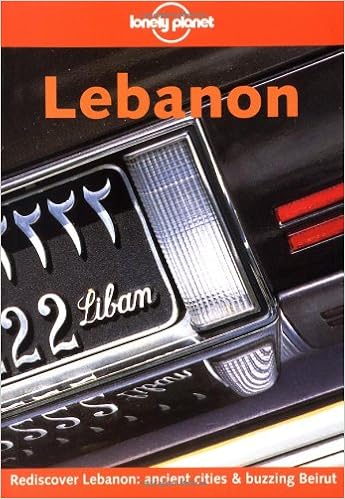
Get Free Ebook Lonely Planet Lebanon, by Siona Jenkins

The means of how this publication is presented in this web site associates so much with that we are. This is an internet site, a much referred site that offers lots of books, from earliest to latest released, from straightforward to challenging books, from a nation to other countries worldwide. So, it's not that array if Lonely Planet Lebanon, By Siona Jenkins is offered right here. You know, you are among the lucky individuals that discover this internet site.

Lonely Planet Lebanon, by Siona Jenkins

Lonely Planet Lebanon, by Siona Jenkins


Lonely Planet Lebanon, by Siona Jenkins


Get Free Ebook Lonely Planet Lebanon, by Siona Jenkins

Reading is a pastime to open up the knowledge home windows. Besides, it could provide the ideas and spirit to face this life. By in this manner, concomitant with the technology development, lots of companies offer the e-book or publication in soft data. The system of this book obviously will be a lot easier. No fear to forget bringing the book. You can open up the gadget as well as get guide by internet.

To recognize exactly how you get the impression from guide, reading is the just one to obtain it. It will be various if you heard from other individuals. Checking out guide by yourself can make you feel completely satisfied and also obtain improved of the book. As example, we extend the great Lonely Planet Lebanon, By Siona Jenkins as the reading material. This brochure of guide supplies you the practical point to get. Even you don't such as reading so much; you must read this book regardless.

Look and also browse racks by racks to locate this book. However sometime, it will be rubbish. Because of this problem, we currently provide the terrific offer to create the short method to get guides from many resources enter double-quick times. By by doing this, it will actually alleviate you to make Lonely Planet Lebanon, By Siona Jenkins so prepared to acquire in double-quick time. When you have actually done and also gotten this publication, it is better for you to swiftly begin reading. It will certainly lead you to obtain the techniques and also lessons swiftly.

Regarding this publication, you could not have to be fretted to get it as checking out product. This publication shows how you could begin to love reading. This book will reveal you just how modernity will certainly finish the life. It will likewise verify that entertaining publication will certainly be additionally factual book that depend upon how the author tells and also utter the definition to the readers. Based upon this situation, now you need to select Lonely Planet Lebanon, By Siona Jenkins as one of your collections to review. Again, that's for your analysis material.

Lonely Planet Lebanon, by Siona Jenkins

Product details

Series: LONELY PLANET LEBANON

Paperback: 264 pages

Publisher: Lonely Planet; 2 edition (December 1, 2000)

Language: English

ISBN-10: 1864501901

ISBN-13: 978-1864501902

Product Dimensions:

5 x 0.8 x 7.2 inches

Shipping Weight: 10.6 ounces

Average Customer Review:

5.0 out of 5 stars

3 customer reviews

Amazon Best Sellers Rank:

#1,286,696 in Books (See Top 100 in Books)

I returned to Lebanon after many years away. This book had everything! My family (who have never left Lebanon) were also amazed by the detail and accuracy of the book (even the cost of a Taxi from Homs to Beirut to within 50 cents US). Insightful and straightforward. Arranged very well. There is very good detail, even on places that the Ministry of Tourism is scant on. Highly recommended!

When I decided to move to Lebanon three years ago, I bought the first edition of this book, and it was like a bible for my husband and me as we got our bearings, traveled around the country, and branched out on our own. We still use it as a reference when we go back to visit our favorite places. The information is clear and easy to follow, the historical sections, information about the culture, and practical information are all up to date and accurate. All in all, this is an excellent resource for anyone coming to Lebanon. Enjoy your stay!

Having travelled a lot using the LP guides with no problems I can only recommend them... but even if your not planning a trip to Lebanon- this book is amazing as a reference to the region; making order out of the chaos of Lebanon's recent history in an unbiased and moderate historiography- unswayed by religous or cultural persuasion and remaining sensitive to Lebanon's unique history of generally fruitful co-existance and co-operation between some 15 different religous/cultural groups who inhabit and interpret such a dramatic and tiny country, especially in a region characterised by the sometimes not-so-happy collision between east and west. This is an extremely valuable guide for travellers, people with an interest in the Mediteranean and the Near East, or for that matter, any one of the 13 million Lebanese descendants living outside of that tiny piece of heaven. The section on Mount Lebanon was particularly good, though the author could have covered more of the awesome hiking trails and forest overlooking Beirut to be found in the Metn valleys (midway between Jenkins & Jousiffes Mt Lebanon & Chouf)... but no body's perfect!! :) This book is excellent and very well written- the authors deserve great credit.

Lonely Planet Lebanon, by Siona Jenkins PDF
Lonely Planet Lebanon, by Siona Jenkins EPub
Lonely Planet Lebanon, by Siona Jenkins Doc
Lonely Planet Lebanon, by Siona Jenkins iBooks
Lonely Planet Lebanon, by Siona Jenkins rtf
Lonely Planet Lebanon, by Siona Jenkins Mobipocket
Lonely Planet Lebanon, by Siona Jenkins Kindle

Lonely Planet Lebanon, by Siona Jenkins PDF

Lonely Planet Lebanon, by Siona Jenkins PDF

Lonely Planet Lebanon, by Siona Jenkins PDF

Minggu, 29 April 2018

Posted by ladislaoprimocamrynbove on April 29, 2018 in | No comments

Free Download Lost Person Behavior: A search and rescue guide on where to look - for land, air and water

You may not expose that this book will certainly give you everything, but it will certainly give you something that can make your life better. When other people still feels confused in selecting guide, it is various with just what you have actually gotten to. By downloading and install the soft data in this site, you can improve the book as your own immediately. This is not kind of magic style as a result of the presence of this site will offer you quick means to obtain guide.

Lost Person Behavior: A search and rescue guide on where to look - for land, air and water

Lost Person Behavior: A search and rescue guide on where to look - for land, air and water


Lost Person Behavior: A search and rescue guide on where to look - for land, air and water


Free Download Lost Person Behavior: A search and rescue guide on where to look - for land, air and water

There are so many publications that can be candidates to review in this current era. Nonetheless, it may be difficult for you to review and complete them simultaneously. To overcome this problem, you ought to select the first book and also make prepare for other books to check out after completing. If you're so confused, we advise you to choose Lost Person Behavior: A Search And Rescue Guide On Where To Look - For Land, Air And Water as your analysis source.

A referred will be decided to acquire the precise means of exactly how you make the deal of the scenario. As what we refer, Lost Person Behavior: A Search And Rescue Guide On Where To Look - For Land, Air And Water has several intentions for you to choose as one of the sources. First, this is really linked to your problem now. This book additionally supplies simple words to utter that you can absorb the info conveniently from that book.

As well as how this book will influence you to do better future? It will associate with just how the readers will obtain the lessons that are coming. As understood, frequently many individuals will believe that analysis can be an entryway to get in the new perception. The assumption will affect exactly how you tip you life. Even that is tough enough; people with high sprit might not really feel bored or quit recognizing that principle. It's exactly what Lost Person Behavior: A Search And Rescue Guide On Where To Look - For Land, Air And Water will certainly offer the thoughts for you.

Just what concerning Lost Person Behavior: A Search And Rescue Guide On Where To Look - For Land, Air And Water If that relates to your problem, it will not just offer those suggestions. It will certainly provide instances, simple as well as straightforward instances of what you need to carry out in solving your problems. It will certainly additionally show up the result and sort of the book that is read. Many people are falling in love in this publication due to the fact that its power to help everyone get better.

Lost Person Behavior: A search and rescue guide on where to look - for land, air and water

About the Author

Robert J. Koester first joined the Appalachian Search & Rescue Conference in 1981. He holds an MS in neurobiology from the University of Virginia. He has contributed seminal research on lost person behavior (beginning with an initial emphasis on dementia) and created the International Search and Rescue Incident Database (ISRID). An incident commander and instructor for the Virginia Department of Emergency Management, and president of the Virginia Search and Rescue Council, Robert has also worked for the United States Coast Guard, National Park Service, and Federal Emergency Management Agency. He is the author of numerous books and articles on search and rescue and an international presenter/trainer.

Read more

Product details

Spiral-bound: 416 pages

Publisher: dbS Productions LLC; 1st edition (August 31, 2008)

Language: English

ISBN-10: 1879471396

ISBN-13: 978-1879471399

Product Dimensions:

6.2 x 1.2 x 8.2 inches

Shipping Weight: 1 pounds (View shipping rates and policies)

Average Customer Review:

4.6 out of 5 stars

79 customer reviews

Amazon Best Sellers Rank:

#85,499 in Books (See Top 100 in Books)

This appears to be a student study guide to be used in a classroom environment only, where an instructor can help fill in all the many blanks. I was hoping to learn something on my own about lost person behavior, but this book doesn't accomplish that. Lots of typos and missing information. Stick to other books on this subject, and/or take a lost person behavior class.

It is amazing what a multi-disciplinary search can turn up. My research is on the non-emergency cognitive and wayfinding behavior of healthy individuals in non-architectural environments, which does intersect strongly with lost person behavior. (In that, being lost in the wilderness is a not-uncommon though most often ephemeral part of the experience of navigation in the back county.) Whereas the purpose of this book is to inform search and rescue personnel, it also represents an impressive attempt to model the behavior of lost persons. General approaches to being lost such as random travel, direction traveling, direction sampling, and staying put (among many others) are defined, and then drawing on the International Search and Rescue Incident Database (the knowledge of generations of searchers from around the world based on specific case outcomes) Koester analyses the behavior of different categories of people in order to extract rule of thumb regarding anticipated behavior. These categories include some you might expect, such as campers, climbers, despondents, autistics, and substance abusers, but also a range of others that you might not expect such as gatherers, cavers, anglers and abductees. There are lessons here for Information Technology professionals as well, in terms of both data collection and data federation from varying agencies with different search and rescue ontologies (or different cultural understandings of the same ontologies!) drawn from different parts of the world. (Well, lessons in the problems thereof, about which Koester gives a good analysis.) Though it is really a handbook, it is well sourced and I feel it is as useful to academics working on related wayfinding cognition issues as it is to search and rescue planners and first responders.

Excellent book for the professional rescuer or rescuer instructor. This book is well written and well laid out in a logical manner. It contains a mountain of statistical data to help rescuers learn trends in searching for different types of lost people from children to the elderly.. from the injured to the athlete.Useful information on limb dominance, night searching, and different terrain searching as well as lost person myths.As with any information test the theories in the real world with your team prior to relying upon them.Suggested read- amy SAR personnelReviewer background-Professional LEO SAR instructor. Large department with multiple teams

You should also check out the LPB Android and iOS apps from Mr. Koester.

Purchased this after it was referenced and recommended in a SAR course. Lots of information on wilderness and lost person behavior, but wish that it had more on urban issues - I'm a CERT instructor. The urban data is for earthquake behavior, and the issues we deal with in South Central states are tornado and hurricane.That said, I wouldn't be without the book when conducting non-storm searches.

Readers be forewarned - for whatever reason, Amazon has combined reviews for two books - Koester's Lost Person Behavior and Koester's Practical Map Exercises - into one set of reviews, posted under each book listing. Koester's Lost Person Behavior is a bible in SAR, well regarded by most searchers. His Practical Map Exercises book is not quite to that standard (see my review of the Map Exercises book, for one opinion). Be sure of which reviews you are viewing. DW, August 2016Robert Koester is indeed one of the principals of Search and Rescue strategy and planning, especially with regard to his work on Lost Person Behavior. This book appeared to me, by the way it was advertised, to be an exercise resource for practical application of his teachings.The book was apparently written as a resource for dbS classes that he teaches; it is stated in the Preface that complete information to understand any search example can be only provided by an Instructor. The information provided in the book is incomplete with regard to sufficient information to undertsand the search criteria, and in numerous instances, does not contain map detail that was indicated to be present (ie, previous search results (yellow dots) in Hopewell Incident, IPP and subject's residence for the Brown Mountain Trail case, IPP in Devil's Ditch case). Lacking such information (where is the IPP which is needed to determine where one starts the search?) makes these problems much more challenging, and likely insolvable. For "independent study," then, without classroom instruction and Instructor support with additional information, this book is useless.For classroom use with an Instructor, this book may indeed be quite useful. The page stock is good quality and the maps are well printed, showing topographical detail, for instance, that is easily readable. Amazon, then, is a good source for student's purchase of this classroom resource.Unfortuneately, for my use as an independent student, it amounted to wasted money. Too bad. There is much to learn from Koester's work, but this stand alone resource is not very helpful without additional information.

A must- for anyone planning search strategy.

The Bible of SAR.If you're into this stuff, get it.

Lost Person Behavior: A search and rescue guide on where to look - for land, air and water PDF
Lost Person Behavior: A search and rescue guide on where to look - for land, air and water EPub
Lost Person Behavior: A search and rescue guide on where to look - for land, air and water Doc
Lost Person Behavior: A search and rescue guide on where to look - for land, air and water iBooks
Lost Person Behavior: A search and rescue guide on where to look - for land, air and water rtf
Lost Person Behavior: A search and rescue guide on where to look - for land, air and water Mobipocket
Lost Person Behavior: A search and rescue guide on where to look - for land, air and water Kindle

Lost Person Behavior: A search and rescue guide on where to look - for land, air and water PDF

Lost Person Behavior: A search and rescue guide on where to look - for land, air and water PDF

Lost Person Behavior: A search and rescue guide on where to look - for land, air and water PDF

Selasa, 24 April 2018

Posted by ladislaoprimocamrynbove on April 24, 2018 in | No comments

Free Download , by Carly Simon

Complete and valid come to be the quality of this publication. When you require something credible, this publication is leading. Lots of people also get , By Carly Simon as referral when they are having deadline. Due date will make someone really feel so misery and also worried of their tasks as well as tasks. But, by reading this publication also little for little, they will certainly be extra eased.

, by Carly Simon

, by Carly Simon


, by Carly Simon


Free Download , by Carly Simon

How a concept can be got? By looking at the stars? By seeing the sea and also checking out the sea weaves? Or by reading a book , By Carly Simon Everybody will have certain unique to obtain the inspiration. For you which are dying of publications and also consistently get the motivations from books, it is truly terrific to be below. We will certainly show you hundreds compilations of guide , By Carly Simon to read. If you such as this , By Carly Simon, you could additionally take it as your own.

The factor of why you could obtain as well as get this , By Carly Simon faster is that this is guide in soft data kind. You can review guides , By Carly Simon anywhere you want even you remain in the bus, workplace, home, as well as other areas. Yet, you may not should relocate or bring guide , By Carly Simon print anywhere you go. So, you will not have heavier bag to carry. This is why your option to make better concept of reading , By Carly Simon is really handy from this situation.

Book, an one of the tricks to enter the new world always is shared in a great way. Also you really admire of this book, you could not obtain anything from here. One method is just by taking the soft file of , By Carly Simon to read and review the book to finish. Understanding what the writer utter can aid you to recognize and also get the benefits of this book. So, it does not need the magic methods to obtain ideas. It doesn't need to take even more times and much cash to obtain this publication as your collection.

This is exactly what you have to do in needing just what we offer. This is not nonsense, this is something to create much better idea. Primarily, book will certainly not always influent somebody to act and assume better. It will certainly rely on how the people will certainly gaze and think of the lesson given by the book. Yet, when you have actually managed checking out guide organized, the , By Carly Simon will have no matter to require.

, by Carly Simon

Product details

File Size: 8689 KB

Print Length: 385 pages

Publisher: Flatiron Books (November 24, 2015)

Publication Date: November 24, 2015

Language: English

ASIN: B011LONEEC

Text-to-Speech:

Enabled

P.when("jQuery", "a-popover", "ready").execute(function ($, popover) {

var $ttsPopover = $('#ttsPop');

popover.create($ttsPopover, {

"closeButton": "false",

"position": "triggerBottom",

"width": "256",

"popoverLabel": "Text-to-Speech Popover",

"closeButtonLabel": "Text-to-Speech Close Popover",

"content": '

' + "Text-to-Speech is available for the Kindle Fire HDX, Kindle Fire HD, Kindle Fire, Kindle Touch, Kindle Keyboard, Kindle (2nd generation), Kindle DX, Amazon Echo, Amazon Tap, and Echo Dot." + '
'

});

});

X-Ray:

Enabled

P.when("jQuery", "a-popover", "ready").execute(function ($, popover) {

var $xrayPopover = $('#xrayPop_00ED0C7442EB11E9B3C983097B73C6EB');

popover.create($xrayPopover, {

"closeButton": "false",

"position": "triggerBottom",

"width": "256",

"popoverLabel": "X-Ray Popover ",

"closeButtonLabel": "X-Ray Close Popover",

"content": '

' + "X-Ray is available on touch screen Kindle E-readers, Kindle Fire 2nd Generation and later, Kindle for iOS, and the latest version of Kindle for Android." + '
',

});

});

Word Wise: Enabled

Lending: Not Enabled

Screen Reader:

Supported

P.when("jQuery", "a-popover", "ready").execute(function ($, popover) {

var $screenReaderPopover = $('#screenReaderPopover');

popover.create($screenReaderPopover, {

"position": "triggerBottom",

"width": "500",

"content": '

' + "The text of this e-book can be read by popular screen readers. Descriptive text for images (known as “ALT text”) can be read using the Kindle for PC app and on Fire OS devices if the publisher has included it. If this e-book contains other types of non-text content (for example, some charts and math equations), that content will not currently be read by screen readers. Learn more" + '
',

"popoverLabel": "The text of this e-book can be read by popular screen readers. Descriptive text for images (known as “ALT text”) can be read using the Kindle for PC app if the publisher has included it. If this e-book contains other types of non-text content (for example, some charts and math equations), that content will not currently be read by screen readers.",

"closeButtonLabel": "Screen Reader Close Popover"

});

});

Enhanced Typesetting:

Enabled

P.when("jQuery", "a-popover", "ready").execute(function ($, popover) {

var $typesettingPopover = $('#typesettingPopover');

popover.create($typesettingPopover, {

"position": "triggerBottom",

"width": "256",

"content": '

' + "Enhanced typesetting improvements offer faster reading with less eye strain and beautiful page layouts, even at larger font sizes. Learn More" + '
',

"popoverLabel": "Enhanced Typesetting Popover",

"closeButtonLabel": "Enhanced Typesetting Close Popover"

});

});

Amazon Best Sellers Rank:

#26,602 Paid in Kindle Store (See Top 100 Paid in Kindle Store)

Honestly, I was pretty disappointed with Ms. Simon's autobiography. There were parts of her life that were interesting. However, it seems that she was constantly going from one depressing situation to another. While I don't doubt that this may have been the true situation, it got boring after awhile. I realize that I will anger many of her devout followers. But, I struggled to maintain my interest in this book.

This downloaded onto my Kindle at around midnight last night and I was awake until 5 or 6 reading it (I'm a little blurry right now but have the day off). First off, this is one of the best memoirs I've ever read in my life. I have been reading the headlines about it and they all seem to focus on sex, sex, sex. And sure, Carly Simon has had her affairs with various guys over the years, but I can't help but wonder if the memoir of a male music star would have those same headlines. I'm guessing the answer is not. What about her music? What about how her voice is the one you hear wherever you go in this world (last week I heard You Belong to Me in the supermarket, and I Haven't Got Time for the Pain in my doctor's office!).But back to the book - it is not what the headlines make you think it is. It is a serious, beautifully written account of the life of a popular but under appreciated artist, that was charmed in parts, deeply romantic in others and downright upsetting elsewhere. It is riveting too - I can't think of many other books that would have had me reading straight through for five hours until it started getting light out. Mostly it is an account of a difficult marriage, that is to say, between her and James Taylor. They were the king and the queen of the 1970s. A lot of people have wondered what it was really like between them and in this book we finally have the answer. But Carly Simon is always respectful and loving towards him, even though she is also very very frank about what went on. The book ends in the early 80s which makes me wonder if there will be a second book! All in all, this book puts you under a spell that will make you want to play all her music all over again and remember what it was like back then. Highly recommended!

I have just finished Boys in the Trees and it is remarkable!!I was hooked from the very first paragraph. "This day may have been THE day, the very day when my identity was born. Before the incident occurred, I didn't think about who I was. After, I would spend the rest of my life testing myself to see if I had been right."Her writing style is elegant and eloquent.Ms Simon gracefully leads the reader through her life piecing together her self identity all the while keeping the reader riveted with an astonishing storytelling talent.Yes all the fun (and surprises!) of the famous relationships and names are here, framed with the songs and music they inspired, but most important, for me, is the story of a woman coming to terms with her own life long quest for love, understanding and forgiveness.

I really enjoyed this book and I wasn't sure I would. It covers Carly's childhood, her early adult life up to and including her marriage to James Taylor and their divorce. Ms. Simon is very honest about her childhood and early adult life. She is painfully honest about her relationship with James Taylor and what their lives were like at that time. I am in awe of her willingness and her ability to allow herself to be so vulnerable. Her love for James Taylor really comes through in the book and it was heartbreaking to me that his first love was his addiction, then came his music, then came Carly and then came his children. This book could have been a typical alcoholic/addiction family story, which still would've been interesting, but her writing and her ability to open herself up and invite the reader in to her personal experiences elevates this story to a completely different level.

I enjoy memoir so this wonderful Carly Simon memoir hit my satisfaction button. I always enjoy when people have learned to be honest with themselves and are unafraid to tell it all or to tell it like it is or was. I found myself going to youtube to play some of her songs and to listen to some interviews interspersed with my reading. Hard to believe she could sing so well while growing up as a stutterer but music became a lifesaver for her. Breakups with those we love are always hard especially when children are involved. Having grown up in New England and around the wealthy who traveled from New York to Martha's Vineyard on an annual basis I well understood the descriptions and the kind of family life that's led. I felt sad for her kind of poor little rich girl set up. She should have had much more love and self-esteem but I understand that sometimes these families don't understand what that's about as long as there is money for nannies and children are treated as strangers. I have always loved the music of Carly Simon and James Taylor and was sorry not to see her as part of the Kennedy Center honors in his behalf. It is easy to read and offers some excellent life lessons.

, by Carly Simon PDF
, by Carly Simon EPub
, by Carly Simon Doc
, by Carly Simon iBooks
, by Carly Simon rtf
, by Carly Simon Mobipocket
, by Carly Simon Kindle

, by Carly Simon PDF

, by Carly Simon PDF

, by Carly Simon PDF

Search Our Site

Bookmark Us

Delicious Digg Facebook Favorites More Stumbleupon Twitter